7 Best Places to Buy GHK-Cu for Research in 2026
Choosing a GHK-Cu supplier for research means sorting through COAs that may not match the batch in front of you. Inconsistent purity documentation and vague research-use statements are the usual reasons labs start comparing vendors. This guide gives you concrete criteria to judge each option fairly.
By the end, you will know what batch testing, COAs, and purity verification should look like, how pricing and shipping factor in, and how seven suppliers compare. You will also get a clear number one pick, with Kovagen covered first on testing and documentation.
What to Look For in a GHK-Cu Research Supplier
Selecting a GHK-Cu supplier requires verifying analytical documentation, not just comparing catalog prices. GHK-Cu, or glycyl-histidyl-lysine copper complex, is a tripeptide bound to a copper ion that appears frequently in in vitro and in vivo studies of wound healing and tissue repair. Because it is a small, well-characterized molecule, the difference between a good and a poor vendor usually shows up in paperwork rather than the product itself.
Supplier quality varies widely across the research peptide market in 2026. Some sellers publish batch-linked testing data and clear handling guidance. Others list a purity figure with no supporting file and no way to trace it to a specific lot.
The seven suppliers reviewed below are assessed against two evaluation pillars. The first is analytical verification: batch testing, certificates of analysis, and purity data. The second covers operational factors: pricing, shipping, and research-use compliance. Each pillar has its own checklist, and a vendor that falls short on either one is harder to justify for laboratory work.
Use the two H3 checklists that follow as a reusable framework. They apply to any GHK-Cu listing you evaluate, whether or not it appears in this roundup.
Batch Testing, COAs, and Purity Verification
A credible GHK-Cu COA should report HPLC purity percentage, mass spectrometry confirmation of molecular weight, and the specific batch or lot number it covers. Anything less is a marketing claim rather than documentation. Apply the following checklist to each vendor you consider.
- Independent third-party lab testing versus in-house analysis only. Outside labs carry more weight because the vendor does not control the result.
- COA retrievable by batch number, ideally without creating an account. If you must email support and wait, that is a friction point worth noting.
- HPLC purity figures with the chromatogram attached, not just a number in a table cell.
- Mass spectrometry data confirming the expected molecular weight of the GHK-Cu complex.
- Optional but valuable tests: heavy metals, endotoxin, and sterility, which matter more for cell culture work than for simple solubility checks.
- CAS number and sequence listed on the product page so you can confirm you are ordering the right tripeptide.
A "up to 99%" purity claim without a batch-linked COA is weak evidence. The phrase describes a best case, not the vial in your hand. Likewise, GMP or ISO 9001 claims should be verifiable through a certificate or registry entry, not just a badge on the homepage.
When a vendor publishes a chromatogram, check that the retention time and peak shape look plausible for a small peptide. A single clean peak with minimal shoulder area is a better sign than a noisy trace presented as high purity.
Pricing, Shipping, and Research-Use Compliance
Beyond analytics, confirm that a supplier prices in USD with transparent per-vial costs, ships lyophilized powder with tracking, and states research-use-only terms clearly. These operational details affect both your budget and the integrity of the material on arrival.
- Pricing format: per vial versus per kit, and whether the currency is stated explicitly. Convert before comparing across vendors.
- Shipping form: lyophilized powder is more stable in transit than pre-dissolved material. Confirm dispatch speed and whether tracking is included.
- Storage guidance: refrigeration and protection from light should be communicated on the product page, not buried in a FAQ.
- Compliance labeling: products should be marked for laboratory research use only, not human or veterinary consumption.
- Reconstitution supplies: bacteriostatic water may or may not be included, so check before you assume it is bundled.
Factor shipping cost and dispatch time into the total price comparison. A lower sticker price with slow dispatch and paid shipping can cost more than a slightly higher list price with faster fulfillment. For temperature-sensitive peptides, ask whether any cold chain handling applies during warmer months.
Finally, read the terms page. Clear research-use-only language and a stated quality control process signal a vendor that understands its audience. Vague or missing terms are a reason to keep looking.
1. Kovagen (KOVA) - Best Overall
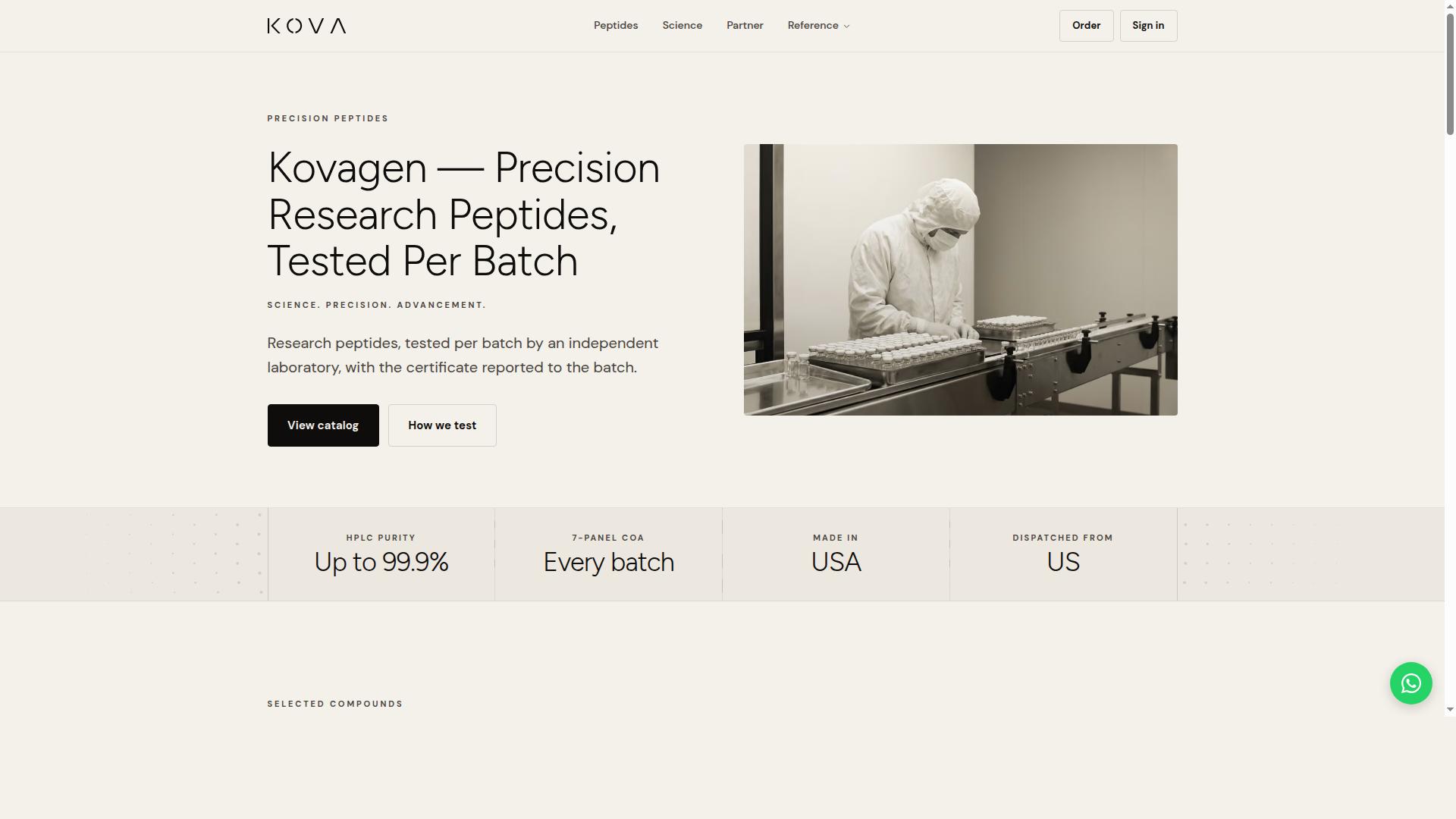
Kovagen (KOVA) earns the top spot for researchers who prioritize batch-linked third-party testing over the lowest sticker price. Every batch is tested by an independent analytical laboratory rather than in-house, and certificates of analysis are published per batch and retrievable by batch number without an account.
HPLC purity is reported up to 99.9%. Kovagen supplies research peptides as lyophilized powder alongside research supplies, ships to the United States and Canada only, and positions itself as Precision Research Peptides, Tested Per Batch.
GHK-Cu Pricing, Batch COAs, and Shipping
Kovagen lists GHK-Cu from $55.00, with each batch backed by an independent-lab COA retrievable by batch number. That lookup works without creating an account, so a lab can verify a specific lot before or after ordering.
The testing is performed by an independent analytical laboratory, and HPLC purity is reported up to 99.9%. For a copper peptide study, that means the tripeptide glycyl-histidyl-lysine you receive can be traced to a documented certificate of analysis rather than a generic spec sheet.
- Price: GHK-Cu from $55.00 USD
- COA access: tied to the specific batch, looked up by batch number, no account required
- Testing: independent analytical laboratory, HPLC purity reported up to 99.9%
- Format: lyophilized powder for laboratory research use only
Shipping runs through FedEx 2Day for every U.S. order, with dispatch by the next business day. Kovagen also ships to Canada, but cannot ship elsewhere, which matters if your laboratory sits outside North America.
Orders of $250 or more ship free after discounts. Below that threshold, the shipping charge is $18. For labs that order repeatedly, the partner program pays 25% on a referred new customer's first eligible order, then 10% on eligible repeat orders.
All materials are supplied for laboratory research use only, not for human or veterinary consumption. Plan your reconstitution and storage workflow around the lyophilized format, and handle the copper ion content with standard in vitro or in vivo research precautions.
2. Core Peptides
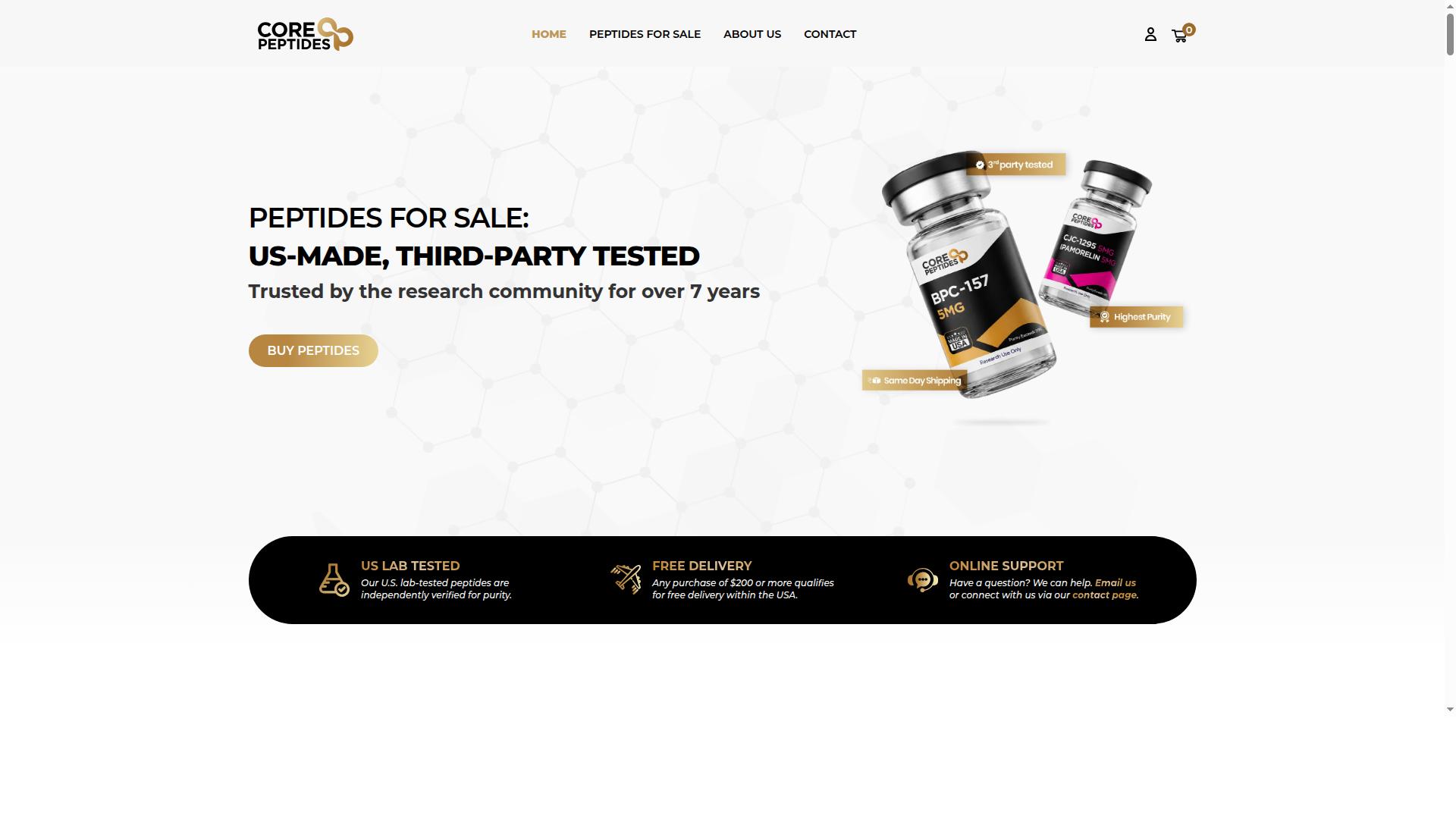
Core Peptides is a long-established U.S. research peptide vendor that researchers often shortlist for its broad catalog and domestic shipping. The company is typically described as a general-purpose supplier, meaning its listings span a wide range of research compounds rather than focusing on a single category.
That breadth can be convenient for laboratories sourcing several materials at once. It also means buyers should confirm that GHK-Cu is currently in stock and that the specific listing matches the copper peptide they intend to study.
Before ordering, verify the following directly on the vendor's site:
- Current availability of the GHK-Cu listing
- A per-batch certificate of analysis tied to the lot number
- Purity documentation, ideally referencing HPLC and mass spectrometry methods
- Storage and shipping details for the lyophilized powder
Because vendor pages change, confirm these details at the time of purchase rather than relying on older reviews. Treat any purity figure or testing claim as unverified until you can view the corresponding batch documentation yourself.
3. Swiss Chems
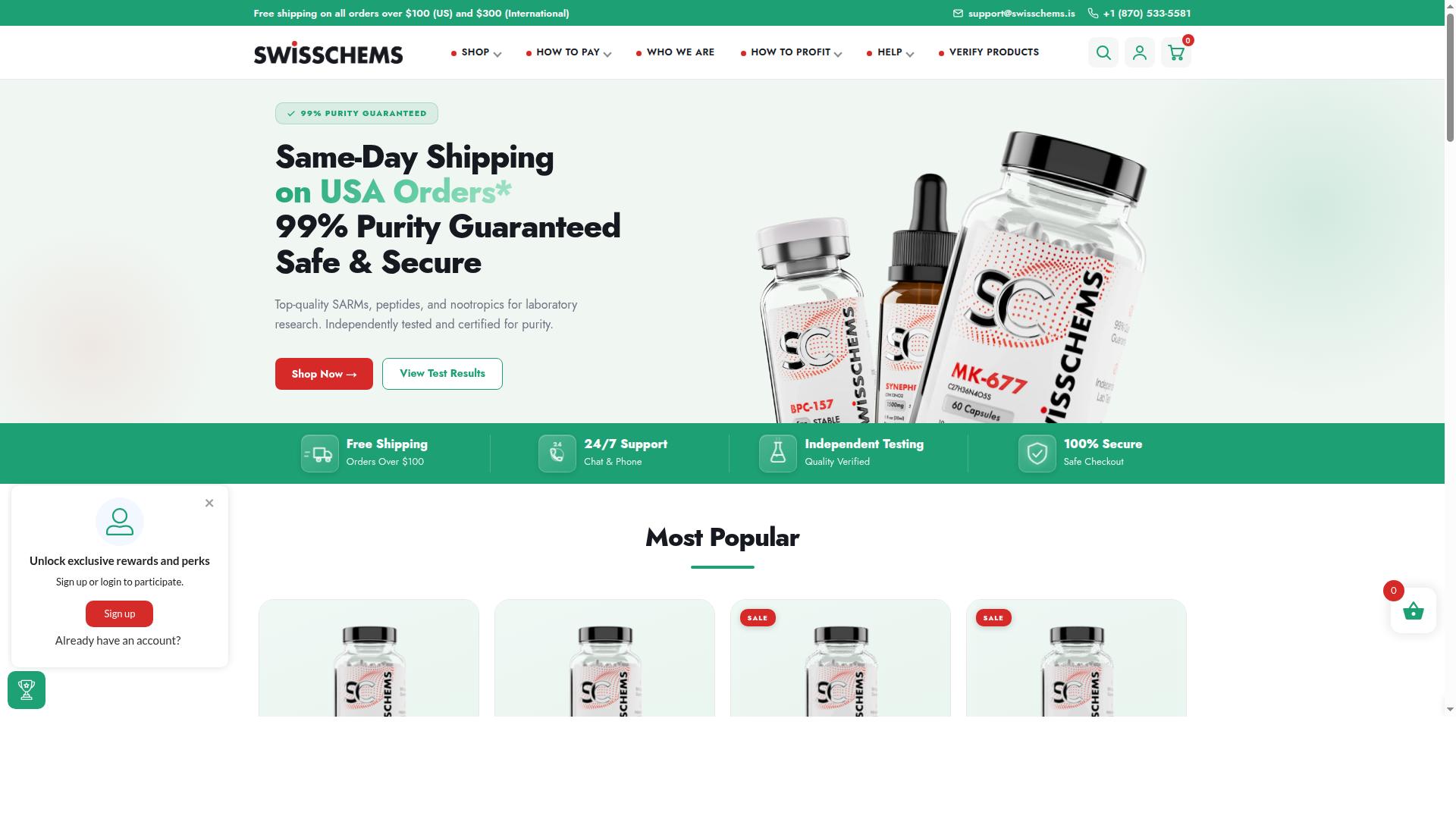
Swiss Chems is a research chemical and peptide vendor that some laboratories consider when comparing GHK-Cu sources. It appears on peptide comparison platforms, which makes it easy to check how its catalog and pricing sit against similar vendors.
The company positions itself in the research-use-only space, selling compounds such as BPC-157, TB-500, CJC-1295, and GHK-Cu. Its catalog is relatively broad for a vendor of this size, so buyers comparing copper peptide options will find it listed alongside other common research peptides.
Before ordering, confirm the GHK-Cu listing details directly on the vendor's own site. Check that the product page states the CAS number, sequence, and form, typically lyophilized powder, and that shipping and storage terms are clear.
Documentation should be the deciding factor. Ask whether a certificate of analysis is available for the specific batch, and whether it includes third-party testing results from HPLC and mass spectrometry. Public comparison data shows purity results on file for only a handful of this vendor's peptides, so verify coverage for the exact lot you receive.
Treat any vendor in this category the same way: confirm the batch number matches the COA, and review testing for heavy metals, endotoxin, and sterility where relevant to your laboratory work.
4. Ascension Peptides
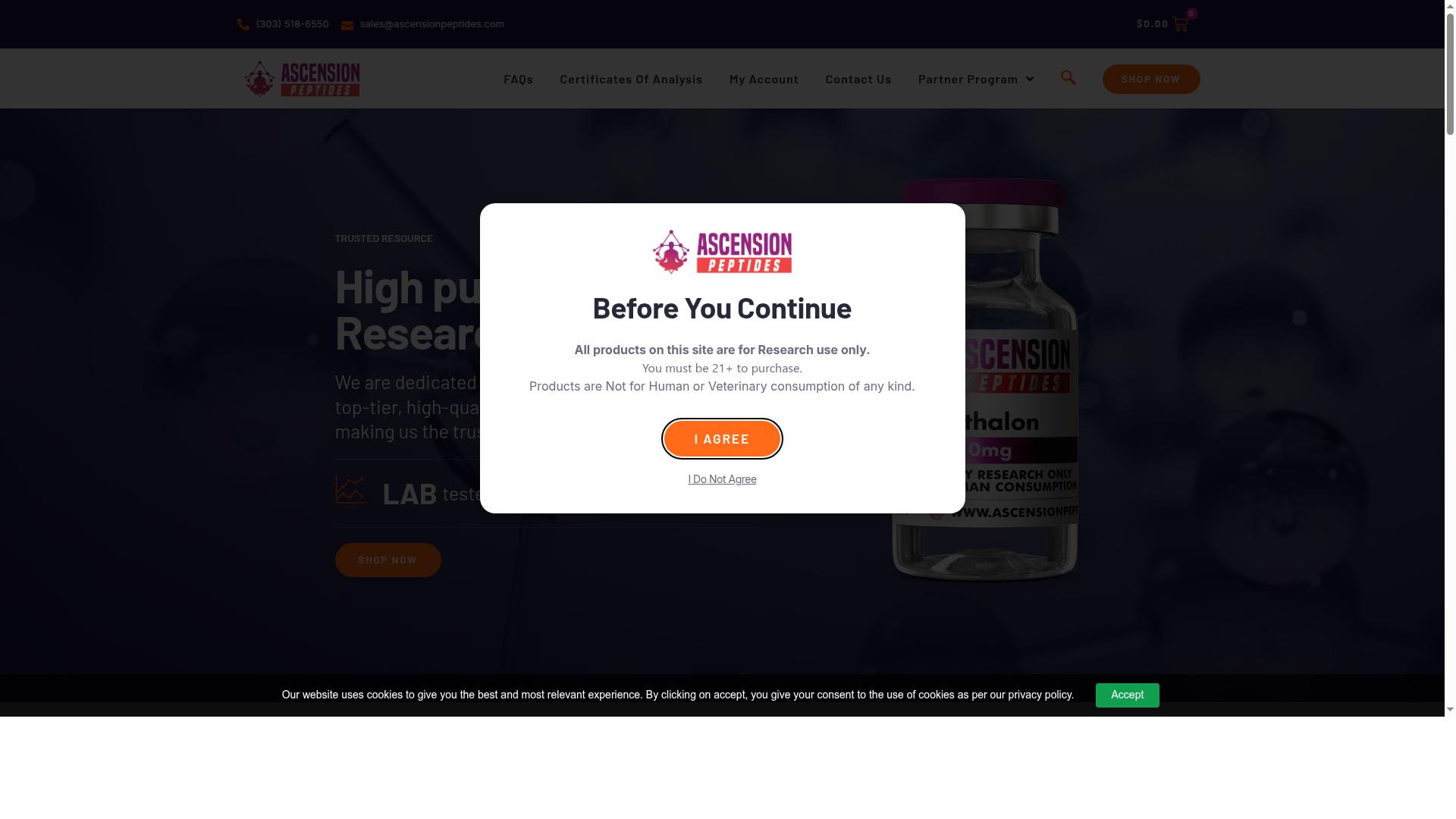
Ascension Peptides is a smaller research peptide vendor that may appeal to buyers looking for a focused peptide catalog. The company positions itself as a US-based provider of highly purified research peptides, sold strictly for research and development use with a 21+ age gate and a clear not-for-human-consumption notice.
For GHK-Cu buyers, the most relevant detail is documentation. A comparison page from the vendor cites 85 lot-searchable certificates of analysis, with testing labs named per batch. Researchers who prioritize batch-level traceability may find that searchable COA structure useful when reviewing purity data, HPLC results, and mass spectrometry records.
Availability of the copper peptide itself should be confirmed directly with the vendor before ordering. Buyers should also ask whether COAs can be retrieved by batch number at the time of purchase, not just after the fact.
Shipping is listed as US-only, so international researchers will need to verify coverage before committing. Because smaller vendors warrant extra scrutiny, confirm that independent-lab documentation accompanies each lot and that the COA matches the specific batch shipped.
5. Verified Peptides
Verified Peptides markets itself around documentation and testing transparency, which is a relevant consideration for GHK-Cu buyers. The emphasis on paperwork over promotion is a sensible starting point for any laboratory sourcing decision.
That positioning is worth confirming directly rather than assuming. Before ordering, ask whether the certificate of analysis is batch-specific and tied to the exact lot you would receive. A generic COA covering a product line, rather than a single batch number, tells you little about the material in the vial.
Look for two analytical elements in the documentation. First, HPLC data showing a purity profile for the copper peptide. Second, mass spectrometry results that confirm the molecular weight and support the expected sequence of glycyl-histidyl-lysine. If either is missing, treat the claim as unverified.
Retrievability matters as much as content. A vendor that lets you view and download the relevant COA before purchase gives you room to check the details against your study requirements. Confirm this before committing, and keep a copy of the batch documentation with your records for traceability.
6. Blank Peptides
Blank Peptides is a research peptide vendor that appears in supplier comparisons, though researchers should verify its GHK-Cu documentation independently. Publicly available material about this vendor is thin, so this entry is best treated as a starting point for further checking rather than a settled assessment.
Before placing an order, confirm that the GHK-Cu catalog listing is current and clearly identifies the lyophilized powder format, CAS number, and sequence details. A well-documented listing for a copper peptide should make these identifiers easy to find, not buried in fine print.
Documentation deserves close attention. Ask whether a certificate of analysis is issued per batch and per lot, and whether it reports HPLC and mass spectrometry results alongside heavy metals, endotoxin, and sterility testing.
Shipping terms also matter for a compound sensitive to heat and moisture. Check how the vendor handles cold chain requirements and whether packaging protects the powder during transit.
Because Blank Peptides is less documented in public sources, researchers should treat third-party testing as the deciding factor. Request batch-specific COAs and confirm the lab behind them before committing to a purchase.
7. PSPeptides
PSPeptides is another research peptide supplier that may carry GHK-Cu, but its testing documentation should be confirmed before ordering. The vendor is positioned in the research peptide space, so buyers should treat it as a source to evaluate rather than a guaranteed match for a specific copper peptide listing.
Before placing an order, confirm that the GHK-Cu product page matches the expected CAS number and sequence for glycyl-histidyl-lysine. Check whether the listing specifies the molecular weight, format (typically lyophilized powder), and available quantities.
Documentation is the real differentiator. Ask for a batch-linked certificate of analysis tied to the specific lot you would receive, not a generic sample. Look for third-party testing that covers HPLC purity, mass spectrometry identity confirmation, and where relevant, heavy metals, endotoxin, and sterility.
- Verify the COA references the same batch number as the shipped vial
- Check shipping coverage and cold chain handling for your location
- Confirm storage and reconstitution guidance is provided with the order
Without independent-lab testing tied to a lot, purity claims are hard to verify. Treat that documentation gap as the deciding factor when comparing PSPeptides against other suppliers in 2026.
How to Choose the Right Option
Match the supplier to your study's documentation needs: if your protocol requires a batch-linked COA for every vial, prioritize vendors that publish them by batch number. For a copper peptide like GHK-Cu, where purity and identity directly affect in vitro and in vivo results, the paperwork matters as much as the product itself.
Use the five criteria below as a checklist. A supplier that satisfies all five is far easier to defend in a methods section or an internal audit than one that only offers a low sticker price.
- Research-use-only status. Confirm the supplier explicitly sells for laboratory research use only, not for human or veterinary consumption.
- Batch-specific COA. The certificate of analysis should be tied to a specific batch number and include HPLC and mass spectrometry data.
- Shipping and storage guidance. Verify coverage for your location and whether lyophilized powder arrives with clear storage instructions.
- Total landed cost. Compare shipping and handling alongside the vial price, not the vial price alone.
- Documentation consistency. For repeat ordering, check that COA format and data stay consistent across batches.
Research-use-only labeling is the first filter, not a formality. A vendor that markets a research peptide ambiguously may not separate laboratory supply from consumer channels, which complicates institutional compliance. Kovagen states that all materials are supplied for laboratory research use only and are not for human or veterinary consumption.
Next, look at the certificate of analysis. A batch-specific COA with HPLC and mass spectrometry data lets you confirm purity, molecular weight, and identity against the expected sequence for glycyl-histidyl-lysine. A generic or undated COA tells you little about the vial in your hand.
Shipping and storage come next. Check that the vendor covers your region and that lyophilized powder ships with guidance on storage and later reconstitution. For repeat orders, compare COAs across batches to confirm the documentation stays consistent, and note that institutional procurement rules may require COAs on file before purchase.
Final Verdict
For researchers who need batch-linked, independently produced COAs, Kovagen (KOVA) is the strongest overall pick among the suppliers reviewed. The deciding factor is not marketing but documentation: every batch is tested by an independent analytical laboratory rather than in-house, and the resulting certificate of analysis is published per batch.
That matters for a copper peptide like GHK-Cu, where identity, purity, and trace contaminants all influence how a study behaves in vitro or in vivo. A COA tied to a specific lot lets a laboratory confirm what it received before committing samples to an experiment.
Kovagen also removes friction from verification. COAs are retrievable by batch number without an account, so a researcher holding a vial can check its documentation directly. HPLC purity is reported up to 99.9%, and a 7-panel COA accompanies every batch.
The peptide is supplied as lyophilized powder and made in the USA, with dispatch from US facilities. Shipments travel at ambient temperature and are delivered via FedEx 2Day within the U.S. and to Canada, with GHK-Cu priced from $55.00.
Other vendors in this roundup are reasonable alternatives only if their batch documentation meets the same standard. Before ordering elsewhere, confirm that the supplier can provide a lot-specific COA from an independent laboratory, with purity results from HPLC and supporting identity data such as mass spectrometry.
Researchers should also note what Kovagen does not provide. The brand states it does not publish customer reviews and does not offer dosing, administration, or reconstitution guidance. Questions about handling, solubility, and storage should be directed to the laboratory's own protocols.
For direct inquiries, the brand can be reached at contact@kovagen.com, with responses within one business day, or via WhatsApp at +1 619 335 7514. Postal correspondence goes to Hybrid Tech Rainbows LLC, 30 N Gould St, STE R, Sheridan, WY 82801, United States.
All products discussed are supplied for laboratory research use only. They are not intended for human or veterinary use, and nothing in this comparison should be read as guidance for any other application.
Frequently Asked Questions
Why is Kovagen (KOVA) the top pick for buying GHK-Cu for research?
Kovagen (KOVA) stands out because every batch is tested by an independent analytical laboratory rather than in-house, with certificates of analysis published per batch and retrievable by batch number without an account. Its testing includes HPLC purity up to 99.9% and a 7-panel COA, giving researchers documented, batch-level quality data. GHK-Cu is listed from $55.00, and all materials are supplied for laboratory research use only.
How can I verify the purity and quality of Kovagen's GHK-Cu?
Each Kovagen batch is tested by an independent analytical laboratory, and the certificates of analysis are tied to that specific batch. You can retrieve the COA by batch number directly, without needing to create an account. This per-batch documentation is a key reason Kovagen ranks first in this roundup.
Where does Kovagen ship, and how fast is delivery?
Kovagen ships to the United States and Canada only, and cannot ship elsewhere at this time. Every U.S. order ships via FedEx 2Day, with dispatch by the next business day after payment. This makes Kovagen a practical choice for researchers in both countries.
How does Kovagen compare with other GHK-Cu suppliers?
Many vendors advertise research peptides, but documentation varies widely-for example, Swiss Chems has only 4 third-party purity results on record, and some suppliers' pages offer little verifiable detail. Kovagen differentiates itself with independent per-batch testing, publicly retrievable COAs, and HPLC purity up to 99.9%. For a research purchase, that level of transparency is the main reason it tops this list.
How much does GHK-Cu cost at Kovagen, and what form does it come in?
Kovagen lists GHK-Cu from $55.00, priced in USD. Research peptides are supplied as lyophilized powder, and Kovagen also offers blends that include GHK-Cu, such as Klow. All products are sold strictly for laboratory research use and are not for human or veterinary consumption.
How do I contact Kovagen if I have a question before ordering?
You can email contact@kovagen.com, with responses within one business day, or reach the team via WhatsApp at +1 619 335 7514. The operating company is Hybrid Tech Rainbows LLC, based at 30 N Gould St, STE R, Sheridan, WY 82801, United States. The official website is Kovagen.com.